About Element Fire & Safety
Element Fire & Safety is a life-safety focused division of Element Contracting Group, providing professional fire alarm inspection, testing, installation, and service throughout Iowa and the Midwest. We specialize in code-compliant fire alarm systems that protect people, property, and operations — with zero shortcuts.
Our background is rooted in the fire alarm and life-safety trade, not just construction. We understand the real-world demands of NFPA codes, AHJ expectations, and the importance of systems that work when they’re needed most.
We work with:
Commercial property owners
Multi-family housing and apartments
Retail and office buildings
Warehouses and light industrial facilities
Schools, churches, and assembly occupancies
Every project and inspection is handled with attention to detail, clear documentation, and direct communication with building owners, property managers, and fire officials.
People-First Approach
·
Reliability You Can Count On
·
A Focus on Quality
·
People-First Approach · Reliability You Can Count On · A Focus on Quality ·
Fire Alarm Install Process
-

Site Review & Code Evaluation
We begin with a site walkthrough and review of project requirements, occupancy type, and applicable codes. This includes:
Review of local and state fire codes
NFPA 72 and IBC compliance requirements
Coordination with the AHJ and project stakeholders
Evaluation of existing systems (if applicable)
This step ensures the system is designed correctly before any work begins.
-

System Design & Device Layout
Based on code requirements and site conditions, we develop a fire alarm system layout that includes:
Fire alarm control panel selection
Initiating device placement (smoke, heat, pull stations)
Notification appliance layout (horns, strobes, speakers)
Circuiting, power, and monitoring considerations
All layouts are designed for compliance, coverage, and future serviceability.
-

Rough-In & Wiring Installation
During the construction or retrofit phase, we install all required wiring and infrastructure:
Fire-rated cabling and conduit (where required)
Backboxes and mounting hardware
Clean, labeled, and code-compliant wiring practices
Coordination with other trades to avoid conflicts
Attention to workmanship at this stage ensures a reliable system long-term.
-

Device & Panel Installation
Once rough-in is complete, we install all system components:
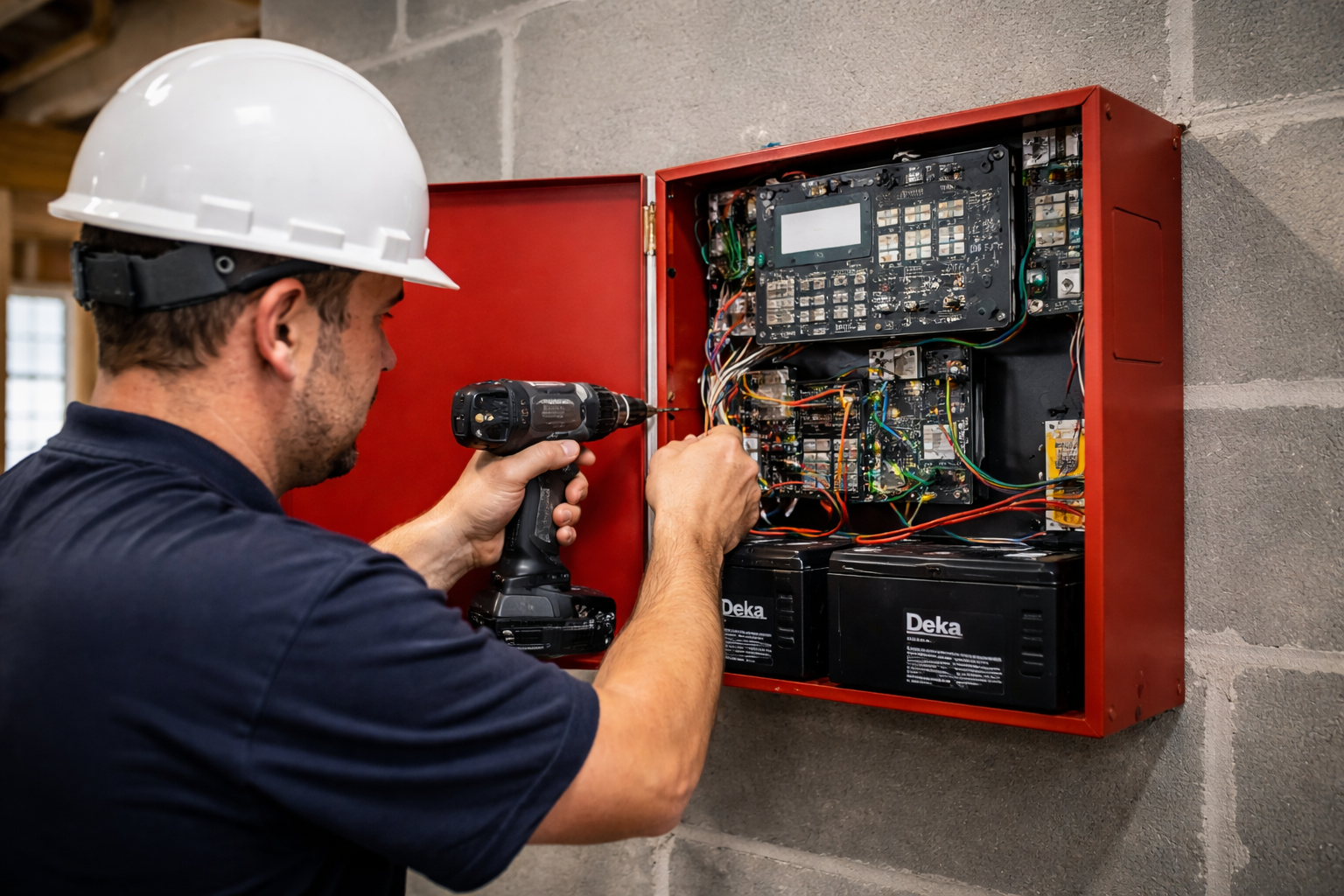
Fire alarm control panel and power supplies
Initiating devices and notification appliances
Batteries and system peripherals
Proper labeling and device addressing
All equipment is installed per manufacturer specifications and code requirements.
-
Programming, Testing & Verification
The system is programmed and tested to verify proper operation:
Panel programming and device addressing
Functional testing of all devices
Alarm, supervisory, and trouble signal verification
Battery and power transfer testing
Monitoring signal confirmation (where applicable)
This step ensures the system operates exactly as intended.
-
Final Inspection & AHJ Coordination
We coordinate and support the final fire marshal or AHJ inspection:
Preparation of inspection documentation
On-site support during inspection
Resolution of any deficiencies, if required
Final system acceptance
Our goal is a smooth inspection with no surprises.
-
Documentation & Turnover
Upon completion, we provide:
Inspection and test reports
As-built drawings (if required)
System documentation and manuals
Guidance on inspection schedules and ongoing maintenance
Element Fire & Safety vs. Typical Fire Alarm Contractor
Element Fire & Safety Typical Fire Alarm Contractor
Backed by a full construction general contractor Fire alarm only — no construction capability
Builds the structure from framing up Brought in after framing or drywall
Fire alarm systems planned during construction Systems added late in the project
Minimal subcontracting Heavy reliance on subcontractors
Lower total project cost through efficiency Stacked subcontractor markups
One contractor from start to finish Multiple vendors and hand-offs
Better coordination with other trades Limited control over scheduling
Cleaner installs, fewer change orders Higher risk of rework
Clear accountability Finger-pointing between trades
Designed to pass inspection the first time Issues often discovered at final inspection